
RAG vs Context Warehouse: The Enterprise GenAI Decision That Costs Millions
TL;DR
Both patterns ground an LLM in your own data; they just disagree on how much to curate before the model sees anything.
- RAG retrieves a handful of relevant chunks at query time. It is cheap per query, scales to petabyte-sized corpora, and suits high-volume search across fragmented documents (wikis, support tickets, live SERP data). The cost is infrastructure: vector stores, sync pipelines, rerankers.
- Context Warehouse (the industry's long-context approach, formalised as Cache-Augmented Generation) loads the whole relevant corpus up front and lets the model's attention do the work. It suits holistic, multi-document analysis but burns far more tokens per query, though prompt caching softens that.
- More tokens is not more accuracy. Long contexts degrade ("lost in the middle") and fail in four documented ways: poisoning, distraction, confusion, clash. RAG's selectivity is a quality control, not just a cost saving.
- For most enterprises the answer is hybrid: retrieve to narrow the field, then load richer chunks of the survivors. The real discipline underneath both is context engineering: deciding what earns a place in the window.
Tech households have an unwritten rule. Leave two data-driven minds in a room long enough and a routine dinner inevitably turns into a heated debate. The other evening, Gergana Andreeva and I found ourselves locked in a passionate standoff over a seemingly innocent question. When scaling enterprise GenAI to maximise our SEO footprint, which infrastructure actually wins: RAG or a Context Warehouse?
What a fun evening. Normal couples talk about holidays; we draw vector database pipelines on paper napkins and debate token efficiency over pizza.
Once the plates were cleared, the core business reality remained. For IT architects, digital leaders and marketing executives, moving generative AI from a basic prototype to a production-ready system is rarely about the Large Language Model (LLM) itself. The real battleground is data delivery.
Two distinct architectural patterns have emerged to solve the challenge of connecting LLMs to proprietary corporate knowledge: Retrieval-Augmented Generation (RAG) and the Context Warehouse. Both aim to ground LLMs in enterprise data to curb hallucinations. They solve very different problems of data velocity, scale and governance, however, and choosing the wrong infrastructure can cost millions of pounds in wasted API fees, open severe compliance leaks, or leave you failing to capture critical enterprise search intent.
1. Defining the architectures
To understand where Gergana and I were drawing our battle lines, we have to look at how, and when, these technologies process information.
Retrieval-Augmented Generation (RAG)
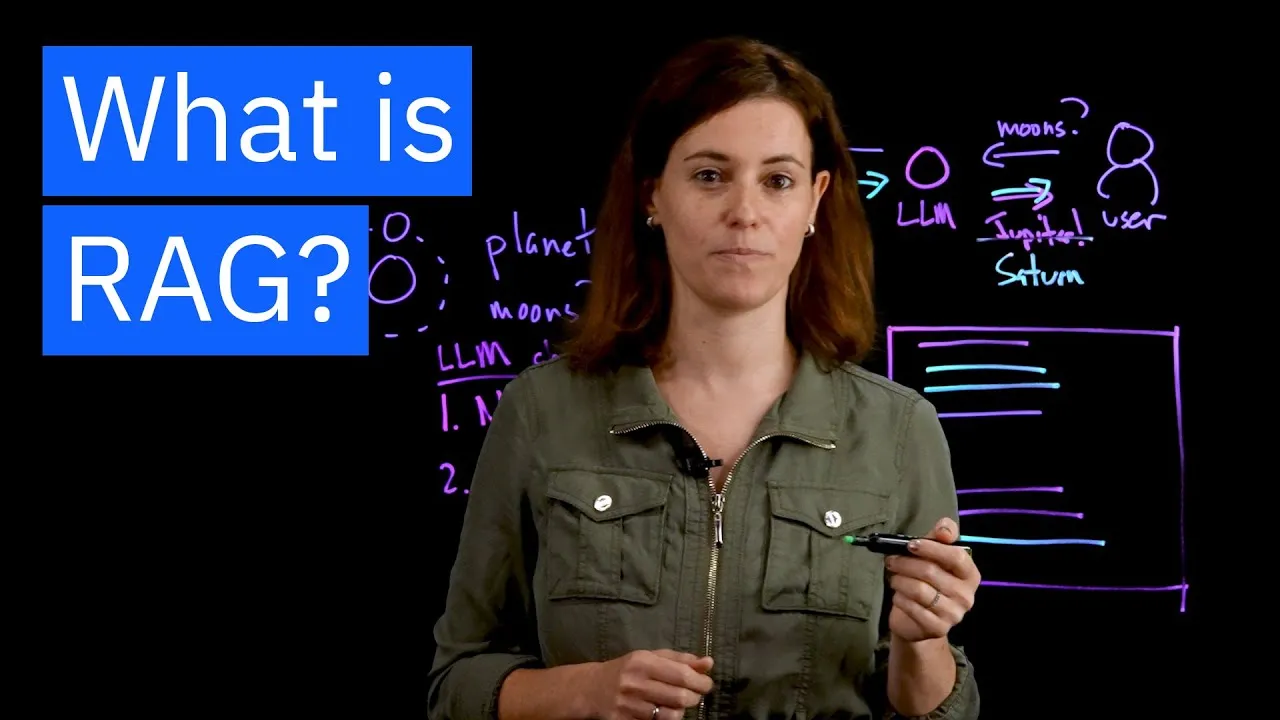
RAG is a dynamic, query-time architectural pattern. When a user submits a query, a retrieval pipeline searches an external data index (usually a vector database). It extracts a handful of highly relevant text fragments and stuffs them into the LLM's prompt window. The LLM uses this real-time evidence to generate its response.
The Context Warehouse
A Context Warehouse is a storage-first, pre-computed setup. Instead of picking out tiny text fragments when a user asks a question, it bundles whole collections of company data ahead of time. It organises, cleans and prepares these files into large data stores, allowing the AI to read entire folders at once. It leans on the current generation of long-context LLMs, which offer million-token-plus windows (the Gemini and Claude families, with some open models like Llama 4 reaching into the multi-million-token range), so the model can analyse vast scopes of information simultaneously, without a traditional search-and-rerank loop.
A note on terminology
"Context Warehouse" is the framing Gergana and I use; the broader industry usually calls this the long-context approach. Its more disciplined cousin, which pre-loads a fixed corpus and pre-computes the model's key/value cache so you don't reprocess it on every call, has a formal name in the literature: Cache-Augmented Generation (CAG) . Whichever label you prefer, the architectural bet is the same: minimise retrieval, maximise what the model reads in one pass.
2. The bigger picture: context engineering
Step back from the two architectures and you notice they are answering the same question. That question is context engineering , a term popularised in mid-2025 by Shopify's Tobi Lütke and Andrej Karpathy, though its roots reach back two decades into ubiquitous-computing research. Karpathy's definition is the one worth keeping: the delicate art and science of filling the context window with just the right information for the next step. RAG and the Context Warehouse are not rival technologies so much as two opposing policies for doing exactly that.
The most useful mental model is Karpathy's: treat the LLM as a CPU and its context window as the RAM in an operating system. It is finite working memory. Your job as the architect is to curate precisely what gets loaded for each step. Building on that analogy, LangChain grouped every context-engineering tactic into four strategies, and our two architectures are just different blends of them:
| Strategy | What it means | Where the patterns sit |
|---|---|---|
| Write | Save information outside the window to pull back later. | The Context Warehouse pre-writes whole, normalised bundles ahead of time. |
| Select | Pull only the relevant fragments into the window for this step. | RAG lives here: retrieval is selection. |
| Compress | Keep only the tokens that matter (summarisation, trimming). | RAG's reranker trims 50 candidates to 5; warehouses summarise to fit the window. |
| Isolate | Split context across sub-systems so no single window is overloaded. | Multi-agent designs and per-session warehouse partitions both isolate. |
Seen this way, the debate stops being "which is better" and becomes a single trade-off. RAG is a Select-first strategy with heavy compression: it curates aggressively before the model sees anything. The Context Warehouse is the opposite bet: minimise selection, load the whole relevant corpus, and trust the model's own attention to find the needle. Neither is universally correct. You are choosing how much curation you do up front versus how much you delegate to the model at inference time.
3. Token usage: cost vs precision
The core operational difference between these two systems comes down to how they consume tokens. This directly affects your monthly cloud invoice and your system latency.
[RAG Query]        ──> [Searches & Filters] ──> Passes 5 Chunks     ──> Low Token Count (Cheap)
[Warehouse Query]  ──> [Skips Search]       ──> Passes Whole Folder ──> High Token Count (Expensive)
RAG (low token consumption)
RAG keeps token counts minimal because it acts like a strict filter. When a user asks a question, the system searches the database, isolates a few small text chunks and feeds only those snippets to the model. Because you block irrelevant pages from entering the prompt, you pay for only a few hundred to a few thousand tokens per query. That keeps operational costs low for high-volume customer queries.
Context Warehouse (high token consumption)
A Context Warehouse skips the search step, dumping large bundles of files straight into the model's window. Even for a short, simple question, the model reads the entire background folder. This can easily run to tens of thousands of tokens per query, with the associated processing cost and latency.
Two important caveats temper the cost story, though. First, prompt caching (and CAG more formally) lets you pay for a stable corpus largely once rather than on every call, so the "tens of thousands of tokens every single time" figure only holds when the context changes each query. Second, more tokens do not guarantee better answers: long-context recall degrades for material sitting in the middle of the window (the well-documented "lost in the middle" effect), where accuracy can fall by 10 to 20 points or more. Loading everything is not the same as the model reading everything well.
4. Head-to-head comparison
| Capability | Retrieval-Augmented Generation (RAG) | Context Warehouse |
|---|---|---|
| Data processing | Query-time dynamic retrieval. | Pre-computed, bulk context assembly. |
| Ideal data volume | Petabyte-scale across millions of fragmented documents. | Megabyte to gigabyte-scale per deep analytical boundary. |
| Token cost profile | Minimal tokens per query; lower API fees. | Heavy tokens per query; higher API fees (mitigated by prompt caching / CAG). |
| Primary use case | Cross-company knowledge management (e.g. searching all internal wikis). | Complex, multi-document analysis (e.g. auditing 50 pages of legal contracts at once). |
| Infrastructure complexity | High (requires sync pipelines, vector stores, rerankers). | Low to medium (focuses on data ingestion and pipeline workflows). |
5. The five core architectural components (RAG blueprint)
To evaluate how these systems fit your enterprise, we can analyse them across five foundational pillars of production-grade AI architecture, the same concerns n8n's production-RAG guidance walks through.
Pillar 1: Data ingestion & index freshness
In an enterprise environment, data drift is a critical failure point. If data is treated as a one-time migration, indexes drift from the source of truth within weeks.
- In RAG: ingestion must be built for continuous
freshness using Change Data Capture (CDC), typically a tool like
Debezium
streaming updates through
Kafka
into a vector database, along with chunk-level timestamps
(
indexed_at) to filter out stale data. - In a Context Warehouse: ingestion focuses on document assembly and schema mapping. Because entire documents are fed to the model, workflow automation platforms like n8n are used to orchestrate complex data preparation, such as joining transactional data with unstructured text, to build a single, comprehensive context file.
SEO example: tracking search rankings & trends
Imagine a massive global e-commerce enterprise managing over 500,000 localised product URLs.
- The RAG approach (the daily alerts): acts like a fast courier service. Every morning it pulls only the specific Google rankings that shifted for your top-performing keywords and drops them straight into the model's view. You get an instant alert the second a competitor steals your spot for a product.
- The Context Warehouse approach (the trend analyser): instead of daily adjustments, you bundle a year of holiday traffic logs, sales numbers and historical ranking data into one folder. The model reads the whole landscape at once to spot macro patterns: "Every November our organic visibility drops because competitors outbid us on winter-clothing keywords."
Pillar 2: The retrieval mechanism
How the system identifies what data to show the LLM differs drastically between the two patterns.
- In RAG: pure semantic search often fails on
enterprise queries containing exact SKUs, part numbers or legal
citations. Production-grade RAG therefore uses a three-stage
hybrid retrieval pipeline:
- Candidate retrieval: parallel dense (semantic) and sparse (BM25 keyword) searches.
- Score fusion: merging the two rankings with Reciprocal Rank Fusion (RRF).
- Reranking: using a cross-encoder model (such as Cohere Rerank ) to trim the top 50 results to the best 5.
- In a Context Warehouse: the retrieval step is bypassed or heavily simplified. Because the LLM has a large context window, the system passes the entire relevant document set to the model and relies on its attention mechanism to find the needle, subject to the "lost in the middle" limits noted above.
SEO example: finding content gaps
When your SEO team wants to find what topics your competitors cover that your site missed entirely:
- The RAG approach (the snippet matcher): you ask the AI whether your company has written about a narrow topic like "Error Code 403-X." RAG scans your database, grabs the single matching support snippet and has the AI build a specific help article on that code.
- The Context Warehouse approach (the whole map): you load your competitor's entire site map, every blog title and their backlink profile into one file. The AI reads the lot at once and tells you: "They run a 50-page interlinked guide on data privacy driving 40% of their traffic, while you have a single summary page. Build a proper content hub here."
Pillar 3: Storage and embeddings
- In RAG: the vector store (e.g. Pinecone , Qdrant ) and the embedding model are tightly coupled. Changing your embedding model later means re-embedding your entire enterprise database, a process that can cost thousands of pounds in GPU hours for a 50-million-document collection.
- In a Context Warehouse: the storage layer is usually a traditional document store, data lake or structured graph database. You are not locked into a specific vector dimension, which makes it considerably easier to swap underlying LLMs or embedding technologies as the market evolves.
Pillar 4: Enterprise access control & security
Checking permissions at the application layer, after data has been pulled, is a dangerous pattern in enterprise AI. If permissions are enforced only after data reaches the LLM context, an indirect prompt injection can quietly exfiltrate it. The landmark example is EchoLeak (CVE-2025-32711) , a critical (CVSS 9.3), zero-click flaw in Microsoft 365 Copilot disclosed by Aim Security in 2025: a crafted email smuggled instructions into Copilot's context and exfiltrated internal data with no user interaction. Tellingly, Copilot is itself a RAG system, which proves that retrieval grounding alone is no substitute for enforcing permissions before data enters the window.
[User Query] ──> [Enforce Permissions (SpiceDB/OpenFGA)] ──> [Filter Vector DB Chunks] ──> [Safe LLM Context]
- In RAG: security must be enforced inside the retriever. Chunks must carry metadata
tags (
allowed_groups,tenant_id) linked to a live relationship-based authorisation service (such as SpiceDB or OpenFGA ) so unauthorised data never touches the LLM window. - In a Context Warehouse: access control is handled at the partition/session layer. Before the warehouse assembles an environment for a session, the orchestration layer validates the user's identity and builds a custom bundle containing only the records they are explicitly cleared to see.
SEO example: protecting secret product launches
Your brand is preparing an unannounced product launch. Content writers need to draft SEO pages for launch day, but the details cannot leak early to the public or to unauthorised staff.
- The RAG approach (the locked drawer): every internal chunk describing the secret project is padlocked inside the vector database. If a general writer asks a broad market question, RAG hides those chunks so they never surface in the AI's response.
- The Context Warehouse approach (the private room): you pull the entire launch brief out of the main system and lock it in an isolated, private folder. Only the approved product-marketing team can connect their AI session to that folder to write the launch copy.
Pillar 5: Observability and lineage
Standard software monitoring cannot detect semantic AI failures. An LLM returning a beautifully formatted but factually wrong answer looks like a success to a basic ping test.
- In RAG: enterprises track metrics like faithfulness (groundedness in the retrieved chunks) and context precision, using evaluation frameworks such as Ragas or Langfuse . This needs chunk-level lineage, tracing a response back to its exact source snippet.
- In a Context Warehouse: observability shifts toward token efficiency and prompt lineage. Because you pass large blocks of text to the model, tracking prompt tokens, execution cost and document-level lineage is essential to stop operational expenditure spiralling.
6. Failure modes: four ways context breaks
The Context Warehouse can look like the simpler, more powerful option: just give the model everything. But "everything" is precisely where things get dangerous. Drew Breunig catalogued four ways a context window degrades, and they map cleanly onto the trade-off between our two patterns.
| Failure mode | What goes wrong | Which pattern is more exposed |
|---|---|---|
| Context poisoning | A hallucination or bad source enters the context and contaminates subsequent steps. | Both: a bad retrieval in RAG, or one wrong document in a warehouse bundle. |
| Context distraction | So much information that the model loses focus on the actual task. | Warehouse: its signature failure as token counts climb. |
| Context confusion | Superfluous, loosely-related content nudges the model toward the wrong answer. | Warehouse: stuffing the window with marginal documents. |
| Context clash | Two parts of the context contradict each other and the model cannot tell which to trust. | Warehouse: documents from different dates or sources, unreconciled. |
This is the honest counterweight to the "just load everything" pitch. The Context Warehouse buys you holistic reasoning, but every extra token raises the odds of distraction, confusion or clash, and (as the "lost in the middle" research shows) of the model simply overlooking a fact buried mid-window. RAG's aggressive selection is not only a cost optimisation; it is a quality-control mechanism that keeps poison, noise and contradictions out of the window in the first place. For most enterprises the pragmatic answer is a hybrid: retrieve to narrow the field, then load richer, larger chunks of the survivors rather than a lonely fragment or the entire haystack.
7. Enterprise use cases: when to use which?
Scenario A: Global brand reputation & competitor SERP intelligence (choose RAG)
- The goal: a Fortune 500 company needs an AI agent to monitor thousands of broad keywords, track volatile daily Search Engine Results Page (SERP) fluctuations and draft rapid-response internal PR briefs.
- Why RAG wins: the data scales to petabytes and updates hourly. RAG works like searching a giant library: it extracts the exact 5 or 10 real-time events out of millions, giving high accuracy without blowing the budget on token costs.
Scenario B: Core Web Vitals & technical SEO site auditing (choose Context Warehouse)
- The goal: a large media enterprise wants to analyse a complete technical site crawl (HTML structure, JavaScript rendering paths, internal link distribution) across 50 core landing pages to fix ranking issues.
- Why Context Warehouse wins: technical SEO audits need a holistic, macro view. Cutting a site's structural map into tiny fragments for RAG is like slicing a Tube map into one-inch squares: the model loses sight of how the system connects. A Context Warehouse lets the model read the whole book at once, so it can see how a heavy script on your home page is dragging down rankings on sub-pages across the site.
8. Building your pipeline with n8n
Whether your enterprise lands on a tuned hybrid RAG architecture or a structured Context Warehouse, the bottleneck is rarely the model; it is the workflow orchestration around it.
A workflow automation platform like n8n lets enterprise IT teams manage both architectures from a single visual canvas:
- For RAG: n8n has native nodes for top-tier vector stores (Pinecone, Qdrant, PGVector ), embedding models (OpenAI, Gemini, Cohere) and rerankers, so teams can build multi-stage hybrid retrieval workflows without brittle custom integration glue.
- For Context Warehouses: n8n excels at orchestrating the ingestion, transformation and security filtering needed to assemble clean enterprise data bundles before sending them to long-context LLMs.
Key takeaways
- RAG is query-time and surgical; the Context Warehouse is pre-computed and holistic. They solve different scale and velocity problems.
- Choose RAG for petabyte-scale, fast-changing corpora where you need a few precise fragments per query and low token cost.
- Choose a Context Warehouse for deep, multi-document analysis where losing the whole-document view breaks the task — but watch for "lost in the middle".
- Enforce access control inside the retriever (RAG) or at the partition/session layer (Warehouse) — never after data hits the LLM (remember EchoLeak).
- For most enterprises the answer is hybrid: retrieve to narrow, then load richer chunks of the survivors.
By prioritising index freshness, hybrid retrieval and database-level access control, enterprises can build production-grade AI systems that scale securely, stay grounded in reality and drive tangible business value.
